In recent years collagen supplements have received great attention, with effects of reducing wrinkles on the skin, increasing elasticity, and maintaining youthful appearance. However, collagen is not just a supplement that makes our skin beautiful. Collagen, which accounts for about 30% of the total protein in our body; skin, bone, joint cartilage, tendon, ligament, and fascia (fascia, it is the basic component of structures such as the connective tissue layer that surrounds the muscles of the body, supporting movement and posture.
Using collagen supplements means supporting this most important building block of the body from the outside. Specifically:
– Reduces the risk of osteoarthritis by maintaining joint cartilage,
– Fascia supports upright posture and smooth movement by increasing its elasticity and strength,
– Prevents major skin and body sagging after rapid weight loss,
– Thanks to Type I collagen, which makes up 90% of the bone matrix, it contributes positively to bone mineral density.
Collagen is therefore an important part of long-term health, mobility and quality of life.
The Most Important Rule: Take Collagen Peptide (Hydrolize Collagen)
The collagen protein is a very large molecule (300,000–400,000 Daltons). When taken at this size, it is not possible to absorb from the intestines and is excreted without use by the body. In order to be effective, collagen must be hydrolyzed, i.e. enzymatically broken down into small pieces (peptides).
Scientific criterion:
For high bioavailability, the average molecular weight of collagen peptides should be between 2,000–5,000 Daltons, ideally more than 90% below 3,000 Daltons.
The peptides under 3,000 Daltons easily cross the intestinal wall and are mixed into the blood. This allows it to spread throughout the body through the vessels that make up our circulatory system, and this is how it can reach fibroblast cells, the cell type in our connective tissue, for example.
Scientific Study:
Oesser S. et al. (2016). “The Oral Intake of Specific Bioactive Collagen Peptides Improves Skin Hydration and Density” – Journal of Agricultural and Food Chemistry. This study showed that collagen peptides between 2,000–4,000 Daltons had a blood-transition rate of over 90%, while those over 10,000 Daltons were almost never absorbed.
Forms of Collagen Supplements
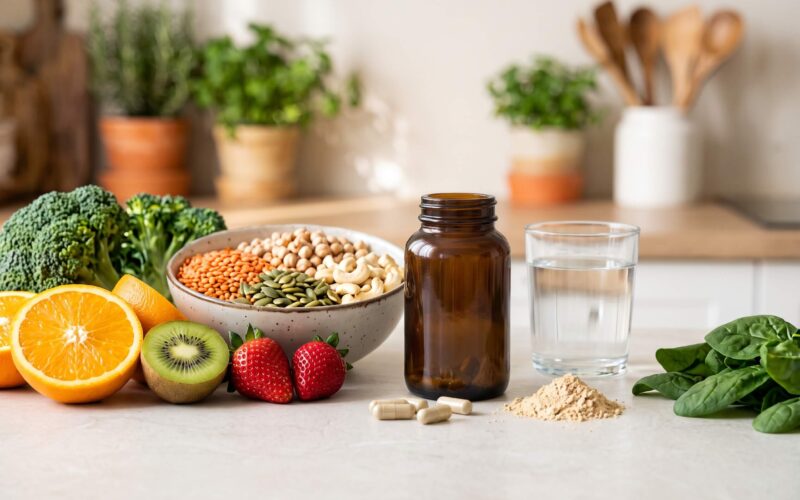
– Powdered collagen: Offers the highest dose (10–20 g) and the best bioavailability; this is the preferred form.
– Sachets collagen: Practical, dosage guaranteed, often enriched with additional ingredients.
– Capsule/tablet: Contains a low dose (500–1000 mg/capsule); difficult and expensive to achieve effective daily dose.
Resource Selection
– Bovine → Types I and III
– Marine (marine) → Type I, lowest molecular weight, highest absorption
– Chicken → Type II (for joints)
– Vegan → Contains plant-derived proteins
Those with a history of allergies should check the source and cross-contamination information. The World Health Organization (WHO) considers hydrolyzed collagen peptides safe in the general population, but recommends reading labels against allergen-induced risks.
Daily Hydrolyzed Collagen Peptide Dosage by Age Group
– 20-30 years → 2,500-5,000 mg
– 30-40 years → 5,000-10,000 mg
– 40-50 years → 10,000-15,000 mg
– Age 50+ → 10,000–20,000 mg (15–20 g is more effective in postmenopausal women)
Time of Use
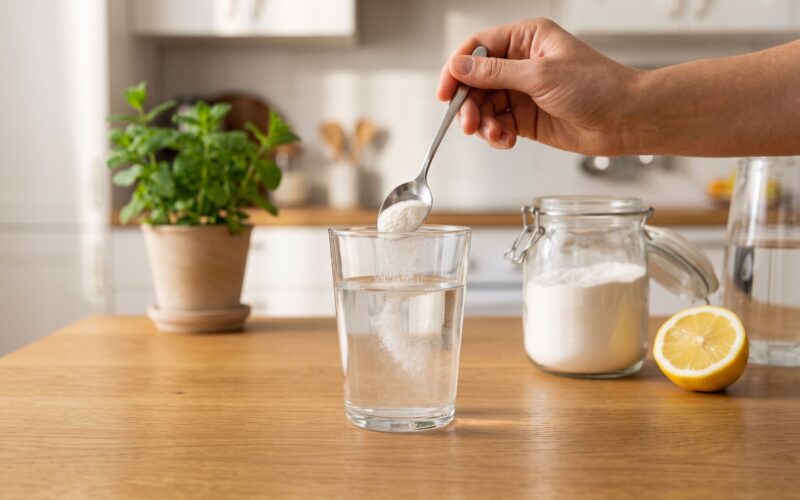
The absorption on an empty stomach is 20-30% higher. The most effective method is to take 10 g of hydrolyzed collagen peptide with a drink containing freshly squeezed orange juice or vitamin C immediately after waking up in the morning.
Contribution of Additional Components
Products containing vitamin C ( ≥ 80 mg), hyaluronic acid (120-240 mg), magnesium, zinc, copper and silicon significantly increase collagen synthesis and effectiveness.
In summary, Bringing Collagen Use to the Most Effective Way
There are three basic rules for collagen supplementation to actually work:
1. Hydrolyzed (peptide) must be in form and weigh up to 3,000 Daltons six molecules,
2. The daily dose should be selected between 5 and 20 g, suitable for age,
3. Take it alongside supportive nutrients such as vitamin C and magnesium.
When these rules are followed, collagen not only keeps your skin, but your joints, fascia, posture, and bone health strong for many years. Hydrolyzed collagen peptides, which the World Health Organization also finds safe, contribute measurable to the quality of life when used consciously and regularly.
References
Bolke, L., Schlippe, G., Gerß, J., & Voss, W. (2019). A collagen supplement improves skin hydration, elasticity, roughness, and density: Results of a randomized, placebo-controlled, blind study. Nutrients, 11(10), 2494. https://doi.org/10.3390/nu11102494
Oesser, S., & Seifert, J. (2016). The oral intake of specific bioactive collagen peptides improves skin hydration and density. Journal of Agricultural and Food Chemistry, 64(40), 7771–7778. (Not: https://doi.org/10.1021/acs.jafc.6b03795
Kim, D. U., Chung, H. C., Choi, J., Sakai, Y., & Lee, B. Y. (2018). Oral intake of low-molecular-weight collagen peptide improves hydration, elasticity, and wrinkling in human skin: A randomized, double-blind, placebo-controlled study. Journal of Medicinal Food, 21(7), 826–834. https://doi.org/10.1089/jmf.2018.4192
König, D., Oesser, S., Scharla, S., Zdzieblik, D., & Gollhofer, A. (2018). Specific collagen peptides improve bone mineral density and bone markers in postmenopausal women—A randomized controlled study. Nutrients, 10(1), 97. https://doi.org/10.3390/nu10010097
Asserin, J., Lati, E., Shioya, T., & Prawitt, J. (2015). The effect of oral collagen peptide supplementation on skin moisture and the dermal collagen network: Evidence from an ex vivo model and randomized, placebo-controlled clinical trials. Journal of Cosmetic Dermatology, 14(4), 291–301. https://doi.org/10.1111/jocd.12174
Clark, K. L., Sebastianelli, W., Flechsenhar, K. R., Aukermann, D. F., Meza, F., Millard, R. L., Deitch, J. R., Sherbondy, P. S., & Albert, A. (2008). 24-Week study on the use of collagen hydrolysate as a dietary supplement in athletes with activity-related joint pain. Current Medical Research and Opinion, 24(5), 1485–1496. https://doi.org/10.1185/030079908X291967