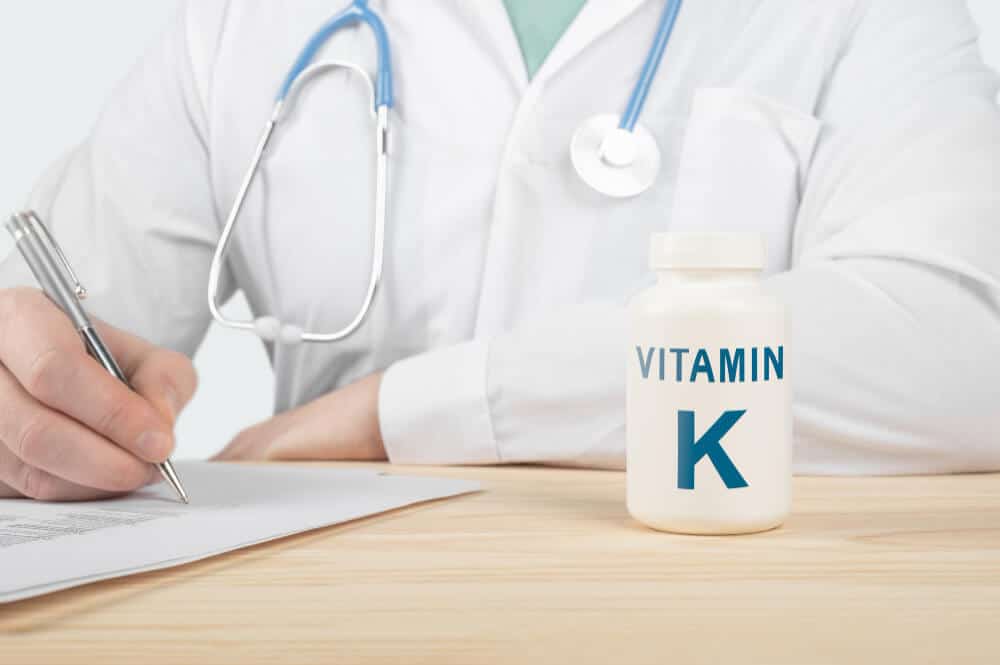
Vitamin K is a vitamin that most people don’t hear much of, but is vital to our body. Although it is often associated with blood clotting, research in recent years has shown that this vitamin has a wide range of protective effects, from bone health to the cardiovascular system. Due to modern living conditions, absorption disorders, or certain drug uses, vitamin K levels may be lower than desired. Fortunately, with the right information and appropriate supplementation approaches, these risks can be easily managed. In this article, we will discuss in detail the basic points you need to know about vitamin K, the signs and causes of deficiency, especially the benefits of supplementation.
5 Key Facts About Vitamin K
1. It is essential in blood clotting: Vitamin K is essential for proteins produced in the liver that allow blood to clot (especially prothrombin and other clotting factors) to become active. These proteins work through a process called gamma-carboxylation, in which vitamin K acts as a cofactor. In case of deficiency, even a minor injury can lead to uncontrollable bleeding. This deficiency, especially in newborn babies, is life-threatening; so in many countries the vitamin K needle is routinely administered immediately after birth.
2. It makes bone health strong: Vitamin K activates a protein called osteocalcin, allowing calcium to bind to bone tissue. This increases bone mineral density and reduces the risk of osteoporosis (bone melting). Studies show that people with adequate vitamin K levels have a lower risk of bone fracture. This effect is especially evident in postmenopausal women and the elderly; vitamin K deficiency paves the way for weakening and fragility of bones.
3. It protects the heart and veins: Vitamin K activates a molecule called the matrix Gla protein (MGP). This protein prevents calcium accumulation (calcification) in vascular walls. Vascular calcification is a major cause of atherosclerosis and increases the risk of stroke with a heart attack. Research reveals that adequate vitamin K intake maintains vascular elasticity and reduces the risk of cardiovascular disease. This effect is especially evident in the form K2.
4. The K2 form may be more effective: Vitamin K has two main forms. K1 (phylloquinone), found mainly in plant sources, is used primarily for blood clotting. K2 (menaquinone) has several subtypes; the MK-7 form in particular remains in the intestines longer and reaches bone and heart tissues more effectively. Studies suggest that K2 supplementation increases bone density and may reverse vascular calcification. Modern supplements therefore often use K2 (MK-7).
5. Deficiency is rare but common in risky groups: Vitamin K deficiency is not uncommon in healthy adults because the liver stores some and partially produces intestinal bacteria. However, fatty absorption disorders (celia disease, Crohn’s, bile tract problems), long-term antibiotic use (disrupting intestinal flora), blood-watering drugs (vitamin K antagonists such as warfarin), and some chronic diseases can lead to deficiency. A quiet deficiency may develop in these groups, and in the long run, it paves the way for heart problems with bone.
Symptoms of Vitamin K Deficiency
Deficiency usually progresses slowly, with the first symptoms involving a tendency to bleed: easy bruising, bleeding gums, frequent nosebleeds, slow wound healing, or heavy menstrual bleeding. More advanced cases can involve blood in the urine or stool. Over time, bone pain, increased fracture risk, and hardening of the arteries may develop. In newborn babies, deficiency can pose life-threatening risks such as brain hemorrhage, which is why vitamin K administration after birth is critically important.
Causes of Vitamin K Deficiency: Who is at Risk?
When it comes to vitamin K deficiency, the following conditions increase risk:
– Conditions that impair fat absorption (celiac disease, inflammatory bowel disease, and liver/cirrhosis-related problems)
– Long-term or recurrent antibiotic treatments (reduces K2 production by reducing intestinal bacteria)
– Use of drugs with vitamin K antagonist
– Natural low storage levels during the newborn period
– Intensive care patients or those who have been fed intravenously for a long time
Regular doctor check-up is essential in these risk groups, and blood tests are performed when your doctor deems it necessary.
Important Benefits of Vitamin K Supplement
Vitamin K supplementation significantly reduces the risk of osteoporosis by supporting bone health. Clinical studies show that regular K2 use increases bone mineral density and reduces fracture rates. In the cardiovascular system, it slows the progression of atherosclerosis by preventing vascular calcification; some research indicates that high doses of K2 may even partially reverse existing calcification.
When taken with vitamin D, it has a synergistic effect: Vitamin D increases calcium absorption, while K2 allows this calcium to be directed to the right location (bones) and prevents it from escaping into the veins. It can also help in managing type 2 diabetes by improving insulin sensitivity. Supplementation in those with absorption problems or those in the risk group is the most effective way to meet the daily need with confidence.
Practical Tips for a Healthy Life
If you are in a risk group, have your vitamin K levels checked at least once a year.
- Also bring up vitamin K in your general health screenings.
If you are taking vitamin D supplements, be sure to discuss adding K2 with your doctor.
Vitamin K supplementation is the most practical way to safely and effectively manage this deficiency, which is often overlooked in modern life. With the right approach, your bones are more durable, your veins are more flexible, and your overall health is stronger.
References:
1. Beulens, J. W. J., Booth, S. L., van den Heuvel, E. G. H. M., Stoecklin, E., & Vermeer, C. (2013). The role of menaquinones (vitamin K₂) in human health. *British Journal of Nutrition, 110*(8), 1357–1368. https://doi.org/10.1017/S0007114513001013
2. Gast, G. C. M., de Roos, N. M., Sluijs, I., Bots, M. L., Beulens, J. W. J., Gelderblom, H. C., Witteman, J. C. M., Grobbee, D. E., van der Schouw, Y. T., & Verschuren, W. M. M. (2009). A high menaquinone intake reduces the incidence of coronary heart disease. *Nutrition, Metabolism and Cardiovascular Diseases, 19*(7), 504–510. https://doi.org/10.1016/j.numecd.2008.10.004
3. Geleijnse, J. M., Vermeer, C., Grobbee, D. E., Schurgers, L. J., Knapen, M. H. J., van der Meer, I. M., Hofman, A., & Witteman, J. C. M. (2004). Dietary intake of menaquinone is associated with a reduced risk of coronary heart disease: The Rotterdam Study. *The Journal of Nutrition, 134*(11), 3100–3105. https://doi.org/10.1093/jn/134.11.3100
4. Knapen, M. H. J., Braam, L. A. J. L. M., Drummen, N. E. A., Bekers, O., Hoogenboom, I. M. P. J., & Vermeer, C. (2015). Menaquinone-7 supplementation improves arterial stiffness in healthy postmenopausal women: A double-blind randomised clinical trial. *Thrombosis and Haemostasis, 113*(5), 1135–1144. https://doi.org/10.1160/TH14-08-0675
5. National Institutes of Health, Office of Dietary Supplements. (2022). Vitamin K: Fact sheet for health professionals. https://ods.od.nih.gov/factsheets/VitaminK-HealthProfessional/
6. Schurgers, L. J., Teunissen, K. J. F., Hamulyák, K., Knapen, M. H. J., Vik, H., & Vermeer, C. (2007). Vitamin K-containing dietary supplements: Comparison of synthetic vitamin K₁ and natto-derived menaquinone-7. *Blood, 109*(8), 3279–3283. https://doi.org/10.1182/blood-2006-08-040709
7. Schwalfenberg, G. K. (2017). Vitamins K1 and K2: The emerging group of vitamins required for human health. *Journal of Nutrition and Metabolism, 2017*, Article 6254836. https://doi.org/10.1155/2017/6254836
8. Theuwissen, E., Smit, E., & Vermeer, C. (2012). The role of vitamin K in soft-tissue calcification. *Advances in Nutrition, 3*(2), 166–173. https://doi.org/10.3945/an.111.001628