The number of people who prefer to eat vegetables is increasing every year. With this interest, we also began to see new expressions on reinforcing food shelves. One of them is “vegan collagen.” When you think collagen is known as an animal-derived protein, this expression may seem a little confusing at first glance.
What is Vegan Collagen?
In order to answer the question of what is vegan collagen, one must first briefly know the collagen itself. Collagen is one of the most abundant structural proteins in the human and animal body. It is involved in the structure of skin, bone, cartilage, tendon, and connective tissues. It is known for its unique triple helix structure, formed by the three protein chains being wrapped together. In these chains, amino acids such as glycine, proline, and hydroxyproline are found at a remarkable rate.
Traditional collagen supplements are also obtained from animal sources for this reason. Cattle skin, fish skin and stamp, pork or chicken cartilage can be cited as an example of these sources. Plants do not produce collagen. Structural support of plants is largely provided by carbohydrates such as cellulose.
In this case, the phrase “vegan collagen” often does not describe a herbal copy of animal collagen. Most of the products presented in this phrase on the market are formulas that combine the nutrients the body uses to create its own collagen from plant or non-animal sources. These products can also come across in some packaging with names such as “collagen booster” or “vegan collagen complex”.

Does Vegan Collagen Really Exist?
The answer to the curiosity of “vegan collagen” that comes to many people’s minds is intriguing in terms of scientific developments. In recent years, researchers have been conducting studies to obtain collagen-like proteins by transferring genetic information that enables collagen production to microorganisms such as yeast or bacteria. Proteins produced by this method are called “recombinant collagen” and can be considered vegan because no animal source is used in the production process.
However, this area is still based on an emerging technology. The use of recombinant collagen in food supplements may be limited, depending on factors such as the cost of production and the legal regulations of countries. Therefore, it would be useful to know that a significant number of the vegan collagen products you see on the shelves today contain nutrients that are involved in collagen formation, not directly collagen.
What Is Included in Vegan Collagen Products?
Although each brand’s formula is different, when a vegan collagen supplement is examined, you often encounter some components. Evaluating these components together makes it easier for you to understand what the product offers.
Vitamin C: Vegan collagen is one of the most basic components of formulas. Vitamin C is essential for the functioning of enzymes involved in the conversion of certain amino acids in the collagen structure. According to scientifically accepted statements, vitamin C contributes to normal collagen formation for normal function of blood vessels, bones, cartilage, gums, skin and teeth.
Amino acids: Amino acids such as glycine, proline, and lysine are among the building blocks of collagen chains. In vegan formulas, these amino acids are usually obtained by non-animal sources, such as fermentation. Some products may include plant protein sources such as peas or rice protein.
Minerals: Minerals such as zinc, copper and manganese are also often preferred. According to accepted statements, zinc contributes to the maintenance of normal skin and normal protein synthesis, copper contributes to the maintenance of normal connective tissues, and manganese contributes to normal connective tissue formation.
Other components: Some formulas may also contain silicon sources obtained from plants such as bamboo or horsetail, hyaluronic acid produced through microbial fermentation, biotin, or various plant extracts. The quantities and sources of these ingredients can vary between products.
Vegan Collagen Sources: What Can Be Included in Nutrition?
When looking for the phrase “vegan collagen sources”, it is often thought to have direct collagen in plant foods. Whereas plant foods do not contain collagen; however, they offer diversity in terms of nutrients involved in collagen formation. Therefore, it is important to take care to get these nutrients in an adequate and balanced way in vegetable nutrition.
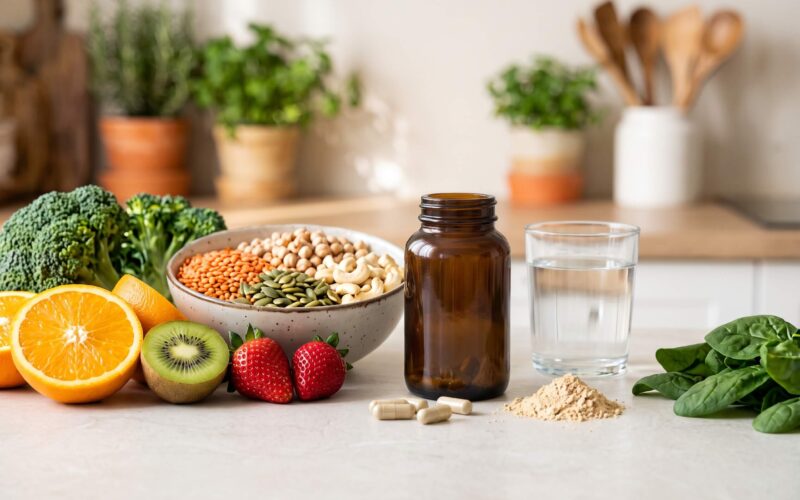
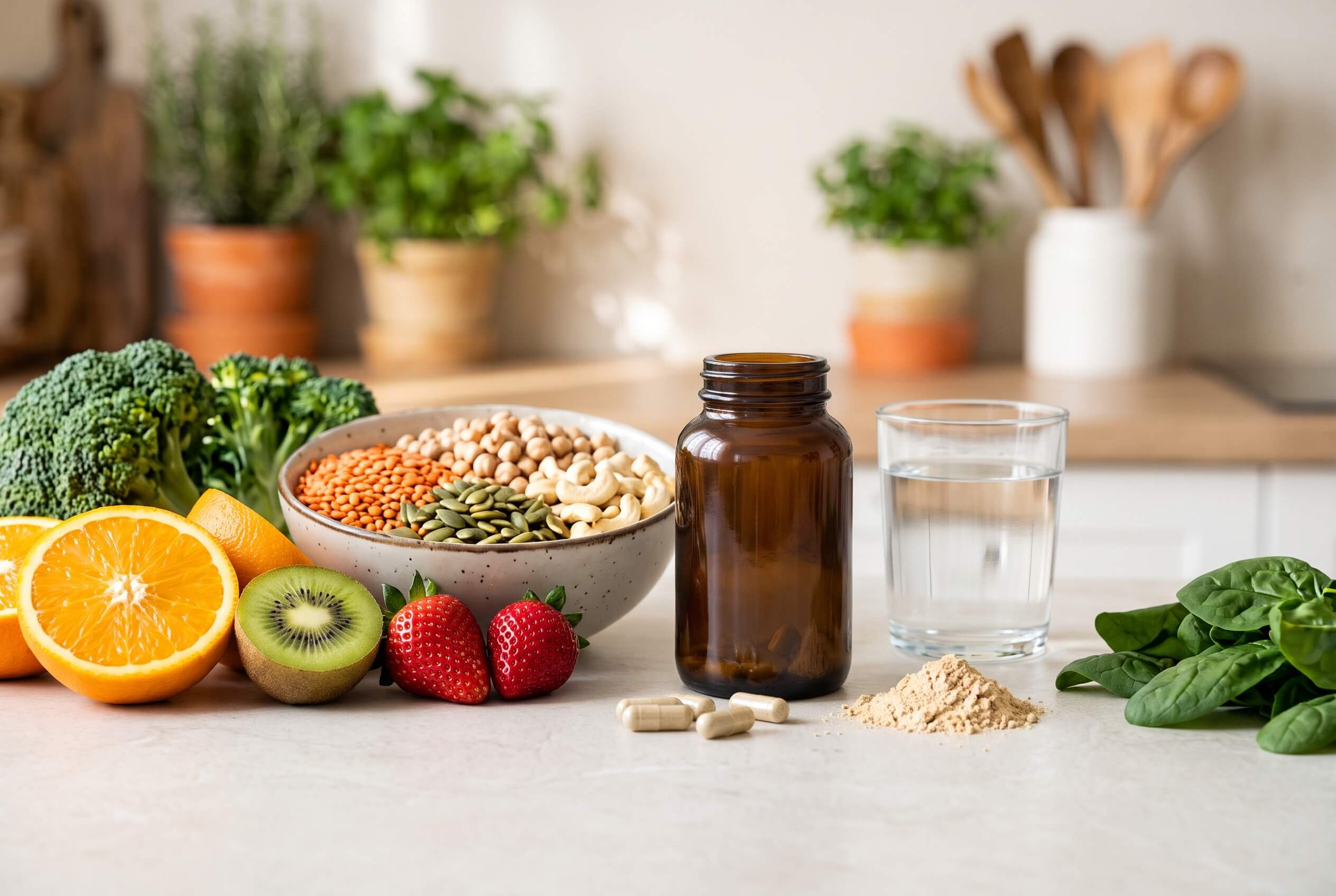
Red and green peppers, kiwis, citrus, strawberries and broccoli are among the foods rich in vitamin C. Legumes such as lentils, chickpeas, beans and soybeans offer a variety of plant proteins and amino acids. With oily seeds such as pumpkin seeds, cashews, and sesame, whole grains can contribute to your diet in terms of minerals such as zinc and copper. Diversifying different sources of plant protein during the day can help meet the need for amino acids.
It is important to remember that food supplements do not replace a balanced and varied diet. Getting support from a dietitian when planning a vegan diet can make it easier for you to identify your needs correctly.
What Should Vegan Collagen Pay Attention to When Reading the Label?
When choosing a vegan collagen supplement, reading the label carefully makes it easier for you to find a product that fits both your nutritional preference and meets your expectations. You can think of the following points as a checklist.
Make it clear what the product contains. Does the list of ingredients include a phrase such as “collagen” or “recombinant collagen”, or does the product consist of vitamins, minerals, and amino acids involved in collagen formation? Making this distinction is the first step in evaluating the product correctly.
See if the Vegan phrase is supported. Supporting the “vegan” expression in the packaging with the certificate or logo of an independent organization can increase your confidence in the content of the product.
Don’t miss the auxiliary items. Whether a product is vegan depends on more than its main ingredients. Check that the capsule shell is made from a plant-derived material, such as HPMC or pullulan, rather than gelatin. Coatings may contain shellac obtained from insects, colorants may contain carmine, and vitamin D3 may come from sheep’s wool lanolin. Vegan formulas generally use lichens as a source of vitamin D3.
Select the form according to your preference. Vegan collagen supplements can be offered in powder, capsule, or tablet form. We also recommend that you pay attention to the source of components used in the coating and binding substances of the tablet in vegan collagen tablet options. While powder forms can be consumed by mixing them into drinks, tablets and capsules stand out with ease of transport and use.
Examine quantities and reference values. See if the label clearly states the amount of each component per serving and the rate at which it meets nutritional reference values (BRD). If you are using more than one supplement, take into account how much the same vitamin or mineral is taken from different products in total. Be careful not to exceed the recommended daily usage.
Check for allergen information. Herbal formulas may include components that may be allergens, such as soy, peas, or shellfish. If you have a known allergy, be sure to read the allergen warnings.
Critically approach statements. Make sure that the statements contained in the packaging are in accordance with the legislation, measured, and without exaggeration. Expressions that promise conclusive results or suggest that they prevent or cure diseases are not suitable for food supplements.
Confirm legal information. T.C. of reinforcing foods in Turkey. It must be approved by the Ministry of Agriculture and Forestry. Check whether the packaging contains a confirmation number, manufacturer or importer information, a deadline, and mandatory warning statements.
The Last Word
Vegan collagen is an expression that often describes formulas that combine the nutrients used by the body when creating collagen, not an herbal equivalent of animal collagen, but without animal resources. Studies in biotechnology suggest that this definition may expand in the future. When choosing a vegan collagen supplement, it will make it easier for you to make a conscious choice of what the product actually contains, how the vegan phrase is supported, the source of the auxiliary substances, and the legal confirmation information together.
This content is intended for general informational purposes only; it is not intended for diagnosis, diagnosis or treatment. Food supplements are not used for the purpose of preventing or treating diseases and are not substituted for a balanced, varied diet. If pregnancy, lactation, an ongoing health condition, or regular use of medication is involved, it is recommended to consult your physician before using supplements.

References
- Shoulders, M. D., & Raines, R. T. (2009). Collagen structure and stability. Annual Review of Biochemistry, 78, 929–958.
- Li, P., & Wu, G. (2018). Roles of dietary glycine, proline, and hydroxyproline in collagen synthesis and animal growth. Amino Acids, 50(1), 29–38.
- Pullar, J. M., Carr, A. C., & Vissers, M. C. M. (2017). The roles of vitamin C in skin health. Nutrients, 9(8), 866.
- Fertala, A. (2020). Three decades of research on recombinant collagens: Reinventing the wheel or developing new biomedical products? Bioengineering, 7(4), 155.
- Báez, J., Olsen, D., & Polarek, J. W. (2005). Recombinant microbial systems for the production of human collagen and gelatin. Applied Microbiology and Biotechnology, 69(3), 245–252.
- Melina, V., Craig, W., & Levin, S. (2016). Position of the Academy of Nutrition and Dietetics: Vegetarian diets. Journal of the Academy of Nutrition and Dietetics, 116(12), 1970–1980.
- EFSA Panel on Dietetic Products, Nutrition and Allergies (NDA). (2009). Scientific Opinion on the substantiation of health claims related to vitamin C and collagen formation. EFSA Journal, 7(9), 1226.
- European Commission. (2012). Commission Regulation (EU) No 432/2012 establishing a list of permitted health claims made on foods. Official Journal of the European Union.
- T.C. Ministry of Agriculture and Forestry. Turkish Food Codex Supplementary Foods Regulation.
- T.C. Ministry of Agriculture and Forestry. Turkish Food Codex Nutrition and Health Declarations Regulation.
- T.C. Ministry of Agriculture and Forestry. Turkish Food Codex Food Labeling and Consumer Information Regulation.