In the modern world, “comfort” is often synonymous with health. Soft seats, elevators, processed food that can be reached at any time, and a life we don’t sweat… But our biology is not based on this “comfort.” On the contrary, the human body needs a certain amount of stress to survive and thrive. That’s where we come up with that fascinating concept that can be considered the key to longevity: Hormesis.
The Reconstruction of the Body and Longevity
Hormesis is the beneficial adaptation process by an organism to stress factors that it is exposed to at a low dose. A toxic substance or a physical stressor is harmful in high doses; low and controlled doses whip the body, activating defense mechanisms and making the cell more resilient than before.
In fact, playing sports is precisely this process of “controlled destruction”. When you run, you force your lungs, when you lift weights, you create micro-level tears in your muscle fibers. So when you’re at the gym, you’re not actually getting stronger; on the contrary, you’re hurting your body, putting it through a process of destruction. The real strengthening process begins when you finish exercising and start resting. If you provide your body with the right environment and raw material to repair this destruction, your body will say, “Next time, I need to be more prepared for this stress,” and raise you to a higher version.
The Blue Zones and the Natural Rhythm of Motion
When we look at the “Blue Zones” (Blue Zones) where the world’s longest-living people are located – places like Sardinia, Okinawa, Ikaria – we see that these people don’t exercise to be “exercise”. They are in a natural difficulty brought about by geography. They usually live in mountainous areas; they climb every day to go to the grocery store, take care of the garden, or visit their neighbor.
This “natural climbing” state is a low-dose hormetic stress that keeps the body constantly alive. Instead of living a life without forcing their bodies at all, these people force their hearts and muscles in their daily routine. However, there is a critical difference: the dietary patterns following this strain are protein-rich, natural, and restorative. They wash their bodies but repair them with the best quality building materials immediately after.
The Wisdom of DNA and the Role of Micronutrients
Inside each of our cells is our DNA, which carries billions of years of evolutionary information. Our DNA knows very well how to repair it when a damage occurs, when to synthesize which protein. Biological pathways in our body that we call “pathway” (e.g., those associated with longevity) Sirtuins or a cellular cleaning mechanism Autophagy), using this hereditary information to move the body to its best version.
However, only “information” is not enough for these pathways to work; they need one “key” and one “fuel”. At this point micronutrients it comes into play. Vitamins, minerals, and cofactors are essential elements that allow these genetic instructions to become a physical result.
- Cellular Repair Kit: Basic components such as Magnesium, Zinc, Vitamin D, and Omega-3 act as catalysts at every stage, from DNA repair to protein synthesis.
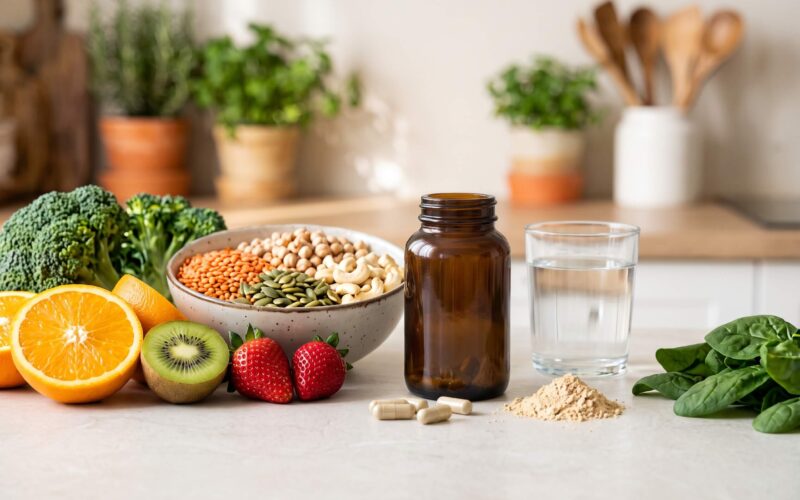
- Importance of Supplements: In today’s world, the decline in soil quality and the intense stress brought on by modern life can make it difficult for us to get all the micronutrients we need from food alone. At this point, supporting the body with scientifically formulated supplements means always keeping those “set-up pathways” open.
Longevity: Living Better, Not Just Longer
Longevity, that is, longevity, is not just delaying aging; it is staying fit and functional for the rest of life. A life without difficulty is a biological process of rusting. Because muscles are not used, their melting (sarcopenia) and reduced bone density is the body’s way of saying, “You don’t need this equipment anymore.”
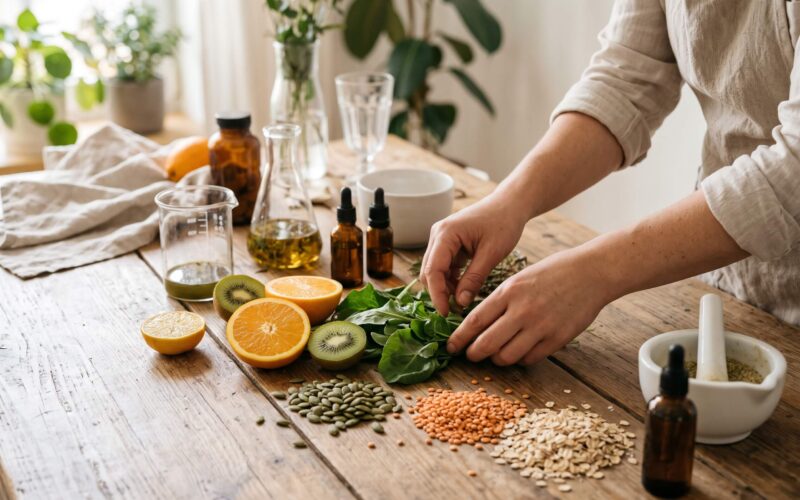
We have to push ourselves. We need to climb up, lift weights, be exposed to cold and heat, and sometimes hit our heart fast. However, in doing all this, we must look at our body as a “chance”. If you don’t carry sand, cement, and bricks to the site, you can’t rebuild the wall that was destroyed. The food and food supplements we consume, these are the building materials.

Conclusion: Build Your Own Future
As a result, our body is not a static structure, but a dynamic system that constantly renews itself. Give your body the right dose of difficulty on the Hormesis principle. Present to it the micronutrients it needs to activate that enormous potential in your DNA, both with food and with the right supplements.
Remember, the longest-lived are not the most rested; they are the ones who push and repair their body in the right way, with the best quality material. The “best version” of your tomorrow is hidden in that difficult step you’re taking today and in your correct dietary decisions that support that step.
References
- Ames, B. N. (2006). Low micronutrient intake may accelerate the degenerative diseases of aging through allocation of scarce micronutrients by triage. Proceedings of the National Academy of Sciences, 103(47), 17589-17594. https://doi.org/10.1073/pnas.0608757103
- Buettner, D., & Skemp, S. (2016). Blue Zones: Lessons from the world’s longest lived. American Journal of Lifestyle Medicine, 10(5), 318-321. https://doi.org/10.1177/1559827616637066
- Calabrese, E. J., & Mattson, M. P. (2017). How does hormesis impact biology, toxicology, and medicine? NPJ Aging and Mechanisms of Disease, 3(1), 1-8. https://doi.org/10.1038/s41514-017-0013-z
- Kirkwood, T. B. (2005). Understanding the odd science of aging. Cell, 120(4), 437-447. https://doi.org/10.1016/j.cell.2005.01.027
- Longo, V. D., & Anderson, R. M. (2022). Nutrition, longevity and disease: From molecular mechanisms to interventions. Cell, 185(9), 1455-1470. https://doi.org/10.1016/j.cell.2022.04.002
- Mattson, M. P. (2008). Hormesis defined. Ageing Research Reviews, 7(1), 1-7. https://doi.org/10.1016/j.arr.2007.08.007