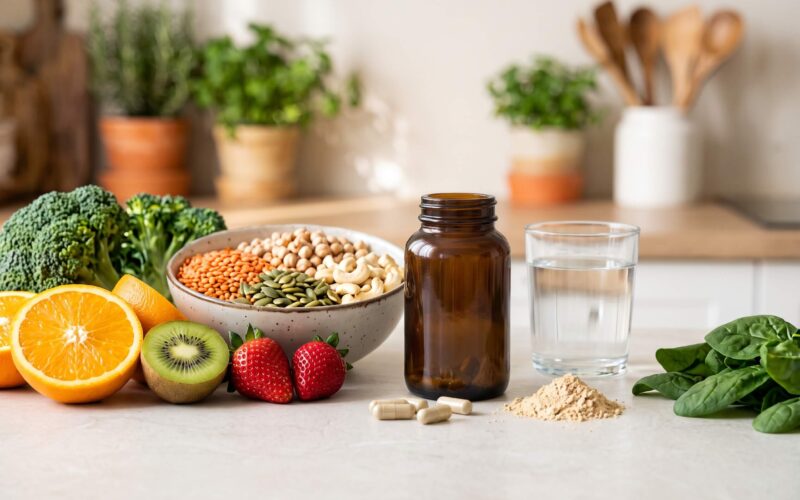
The importance of resorting to accurate and reliable sources of food supplements, wellness trends, and healthy living practices is growing, as everyone can produce content on whatever they want, and not all content can reflect accurate information. Fortunately, health authorities began to put their hands on it to facilitate access to the right information, for example, Harvard Medicine Magazine has created a special chapter in their current issue, “Fact and Fiction”, which aims to bring scientific facts to readers in the most understandable and reliable way so that they can easily access the right information on a healthy life journey. In this article, we aim to share information about collagen supplementation based on current scientific data.
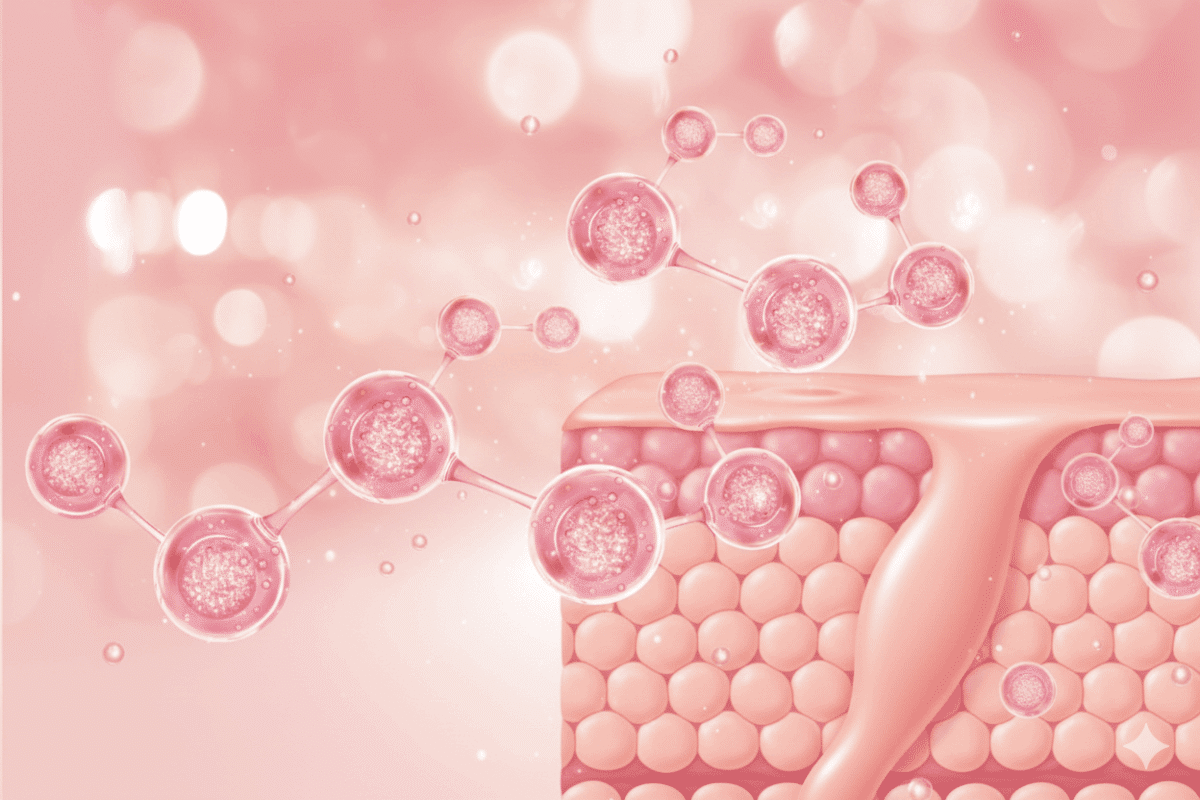
Collagen is the body’s most common protein, an essential component that ensures structural integrity of skin, joints, bones, hair and nails. As age progresses, natural collagen production is decreasing, and this is the case collagen supplementsit highlights the role of supporter.
As with any supplement, production conditions are critical in collagen supplementation. Production facilities compliance with GMP standards, raw materials quality and storage conditions directly affect product effectiveness. All components contained in reinforcing foods must be stabilised together and not interact inversely. Therefore, ingredients other than collagen must also be compatible with collagen absorption. Product form (dust or capsule) determines these choices, since differences such as the solubility of components in water or oil can affect stabilization. R&D teams should confirm the interaction of collagen peptides with components such as hyaluronic acid, ceramide, elastin, or vitamin C with laboratory tests.
What Is Collagen Supplementation and What Does It Do?
Collagen supplementation, a dietary supplement that is readily absorbed by the body, usually consists of hydrolyzed collagen peptides in dipeptide and tripeptide forms. The lower the molecular weight (for example, 2,000–3,000 daltons), the higher the bioavailability. It is usually derived from cattle, fish, or chicken. Bone marrow broth also provides collagen, but its larger molecules must be broken down into small peptides; the hydrolyzed form offers more effective absorption.
Research shows that in regular use, skin elasticity increases, humidity levels rise, and joint comfort improves. For example, 10 grams of hydrolyzed collagen daily significantly supports skin moisture and elasticity (Pu et al., 2023).
What Are the Benefits of Collagen Supplements?
Scientific studies reveal the following benefits of collagen supplementation:
- Increases skin moisture and elasticity
- Reduces wrinkle appearance
- It promotes joint mobility and relieves symptoms of osteoarthritis
- Increases hair and nail strength
- Contributes to bone and muscle health
Positive effects are observed in regular use; hydrolyzed forms yield effective results thanks to high absorption.
Which is the Best Collagen Supplement for You?
The best collagen supplementation varies according to individual needs, lifestyle, and goals. Products containing hydrolyzed peptides and with low molecular weight should be preferred as these provide superior bioavailability. In addition, formulas enriched with a combination of Type 1-3 collagen and additional supporting components offer more comprehensive benefits.
For example:
- If your priority is skin gloss, moisture balance, and beauty; beauty-oriented formulas supported by components such as hyaluronic acid, ceramide, elastin, biotin, or resveratrol may be more suitable for you.
- If you are aiming for joint, muscle, and overall body health; all body-supported products containing magnesium, multiple collagen types, or mineral balance may be preferred.
- If you are looking for an antioxidant and detox effect; options enriched with green vegetable complexes or booster mixtures may come to the fore.
- If you want stress management and immune support; formulas containing adaptogen fungal complexes can yield more effective results.
- If you want to combine daily vitamin-mineral balance with collagen; multibalance-containing products offer a practical solution.
Low molecular weight products should be a priority in any case. Positive changes can be observed within 4-8 weeks of regular use. After all, what is best for you is the formula based on scientific data, with stable and compatible components, which best responds to your needs.
What Do People Using Collagen Supplements Say?
Users often report an increase in skin moisture, improvement in joint comfort, and a difference in hair-nail strength. Regular use reinforces these effects.

How to Take Collagen Supplements and When to Take It?
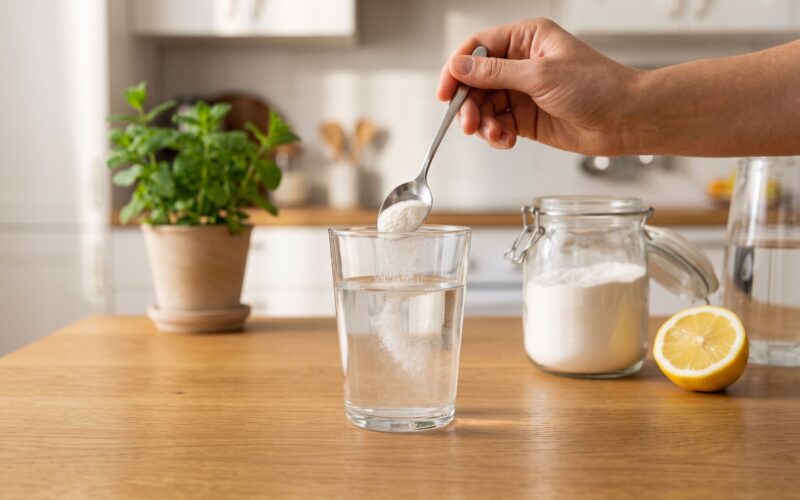
The daily dose is between 2.5 and 15 grams. The powder form can be taken by mixing it into water or drinks. It is suitable for absorption in the morning or evening on an empty stomach; taking it with food may increase the absorption of additional components. The combination of vitamin C supports collagen synthesis.
How Old Is Collagen Supplementation Used and How Long Should It Be Used?
Collagen production begins to slow down from the end of the 20s and decreases by about 1-1.5% per year. For this reason, supportive use is recommended from the age of 25 to 30. The effects usually become apparent in regular use for 8 to 12 weeks; periods of 3 to 6 months are common, and long-term use is also possible.
As a result, collagen supplementation is an approach supported by scientific data, contributing to healthy aging. Depending on your needs, you can add beauty-oriented, whole-body-supported, magnesium-enriched, mushroom complex-containing, green-booster, multibalance, or intensive ceramide-elastin formula options to your daily routine by evaluating them with your doctor.
References:
de Miranda, R. B., Weimer, P., & Rossi, R. C. (2021). Effects of hydrolyzed collagen supplementation on skin aging: A systematic review and meta-analysis. International Journal of Dermatology, 60(12), 1449–1461. https://doi.org/10.1111/ijd.15518
García-Coronado, M. C., Martínez-Olvera, L., Elizondo-Omaña, R. E., Acosta-Olivo, C. A., Vilchez-Cavazos, F., Simental-Mendía, M., & Guzmán-Aguilera, R. (2019). Effect of collagen supplementation on osteoarthritis symptoms: A meta-analysis of randomized placebo-controlled trials. International Orthopaedics, 43(3), 531–538. https://doi.org/10.1007/s00264-018-4211-5
Harvard Medicine Magazine. (2025). Fact and Fiction [Special section]. Harvard Medicine Magazine, Fall 2025 issue.
Pu, S. Y., Huang, Y. L., Pu, C. M., Kang, Y. N., Hoang, K. D., Chen, K. H., & Chen, C. (2023). Effects of oral collagen for skin anti-aging: A systematic review and meta-analysis. Nutrients, 15(9), 2080. https://doi.org/10.3390/nu15092080
Simental-Mendía, M., Sánchez-García, A., Vilchez-Cavazos, F., Acosta-Olivo, C. A., Peña-Martínez, V. M., & Martínez-Aguilar, M. A. (2025). Effect of collagen supplementation on knee osteoarthritis: An updated systematic review and meta-analysis of randomised controlled trials. Clinical and Experimental Rheumatology, 43(1), 126–134.
Varani, J., Dame, M. K., Rittie, L., Fligiel, S. E., Kang, S., Fisher, G. J., & Voorhees, J. J. (2006). Decreased collagen production in chronologically aged skin: Roles of age-dependent alteration in fibroblast function and defective mechanical stimulation. American Journal of Pathology, 168(6), 1861–1868. https://doi.org/10.2353/ajpath.2006.051302