One of the most visible components of reinforcing food shelves in recent years is collagen. However, it is not a newly discovered substance in the laboratory: a basic building protein that makes up about a third of the total amount of protein in the human body, forming the carrier skeleton of many tissues from the lower layer of the skin to the articular cartilage. What’s new is that this protein is processed with food technology to transform it into a water-soluble, odorless and easy-to-use form. That’s exactly what the hydrolyzed collagen expression, which you often encounter on labels, says.
The Place of Collagen in the Body
Collagen molecules are made up of long chains of amino acids entwined in a tight order called a triple helix. The main components of these chains are glycine, proline, and hydroxyproline; these three amino acids make up about half of the total amino acid content of collagen hydrolysate. Hydroxyproline, on the other hand, is a collagen-specific amino acid, so it is used in scientific studies as an indicator of the presence of collagen in the tissue.
Chains come together to form a three-dimensional network that gives fibres, fibers, resistance to draw into tissue, and flexibility. In the dermis layer of the skin, tendons, bone matrix, vascular walls, and joint cartilage, this network is woven at different densities. It is known that about three-quarters of the dry weight of the skin is made up of collagen.
It wouldn’t be wrong to make the structure look like a building. Collagen fibers act as carriers like a reinforced concrete skeleton, while elastin gives the tissue the ability to collect back, while hyaluronic acid creates the capacity to retain water. When the three components are found together, the texture exhibits both a full and resistant structure.
Hydrolysis: The Process of Minimizing Protein
In its natural form, collagen is a large molecule and is almost impossible to dissolve in cold water. The hydrolysis process was developed to solve this problem.
The process consists of roughly three stages. First, raw tissue from the animal source is cleaned and de-mineralized. Then, in a temperature and pH controlled environment, collagen is dissolved. In the final stage, food-grade enzymes come into play and cut long protein chains from specific points, separating them into short peptides. In commercial products, the average molecular weight is mostly reduced to 2,000–5,000 Dalton ranges. The resulting product is called hydrolyzed collagen or collagen peptide; the two terms describe the same raw material.
The practical consequences of this reduction are evident. The powder dissolves without clumping in cold water, does not gel, does not leave a distinct taste or smell. Here it is necessary to clarify a often confused distinction: gelatin is also obtained from collagen, but is only partially broken down, the molecular weight is higher, and when it cools, it gels. Hydrolyzed form is a version that has been taken one step further, reduced to peptide level. The preferred form in beverages, powders and liquid supplements is therefore hydrolyzed.
The term “double hydrolyzed collagen” seen on labels from time to time is not a technical classification, but a definition used to describe the hydrolysis process being applied in two stages and reducing the molecular weight further.

Collagen Types and Uses
To date, 28 different types of collagen have been identified in the human body, but there are three that stand out in the food and supplement field.
Type IIt is the most common form in the body. It is concentrated in the dermis layer of the skin, bone, tendons, and nail bed. It is usually derived from cattle skin or fish skin and scales; the second source is referred to as “sea collagen” and forms an alternative for those who do not consume red meat.
Type IIIt is the main structural protein of joint cartilage and spine discs. Its source is mostly chicken breast cartilage. There is an important technical distinction here: undenatured Type II with hydrolyzed Type II (also known as UC-II) are two separate raw materials that have undergone different processes, with different amounts of use. When reading the label, it is necessary to distinguish which one you are facing.
Type IIIIt is found along with Type I in the skin and vascular walls, so it is usually in the same product as it.
The phrase “type 1 2 3”, which you often see on the market, indicates that the product contains the collagen type from multiple sources together. Type I and III are dominant in skin, hair and nail-oriented formulations, while Type II is prominent in products for joint and cartilage tissue.
Joint Floor of Skin, Hair, Nails and Joints
The reason these four tissues are referred to under the same heading is because they share a common structural ground. Most of the dry weight of the skin’s dermis layer consists of collagen fibers. The hair itself is a keratin protein, but the connective tissue surrounding the hair follicle is rich in collagen. The nail plaque also consists of keratin, and the nail bed beneath it leans on the connective tissue. In the joints, the cartilage is a tissue between the bone endings, consisting mainly of Type II collagen.
It needs to be clear here in terms of legislation. The use of health declarations in food and food supplements in Turkey is regulated by the Regulation on the Use of Health Statements in Food and Supplementary Foods published in the Official Gazette dated 20 April 2023 and numbered 32169; the authority in this area belongs to the Ministry of Health, the Turkish Medicine and Medical Device Agency. In addition to the guidelines published by the agency on April 26, 2023, health statement statements that can be used in products are listed.
The collage itself is not on this list. Thus, expressions that can be used in a product are based on vitamins and minerals that accompany the formulation and are on the list. Some of the expressions included in the manual appendices include:
- Vitamin C contributes to the normal collagen formation required for the normal function of the skin.
- Vitamin C contributes to normal collagen formation, which is necessary for the normal function of cartilage and bones.
- Biotin contributes to the maintenance of normal hair and skin.
- Zinc contributes to the protection of normal hair, nails, and skin.
- Copper contributes to the maintenance of the normal structure of connective tissues.
- Manganese contributes to the formation of normal connective tissue.
This is why qualified formulations often offer collagen along with vitamin C, biotin, and zinc. In order for these expressions to be used, the relevant nutrient element must be present in the product to meet the meaningful quantity condition defined in the legislation. In addition, the declaration should be made to refer only to the relevant food item, not the entire product.
Practical Notes in Daily Use
Powdered forms offer flexibility in adjusting the amount and are generally more economical per serving. Tablets and capsules are convenient, although multiple units may be needed to reach higher amounts in grams. Liquid and shot forms are often chosen for portability.
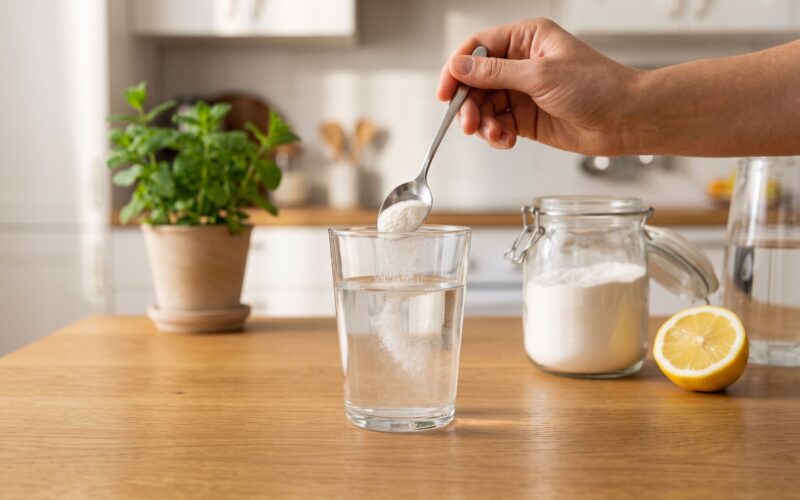
There are no strict rules about timing. Powder collagen is easily dissolved in cold or warm water, milk, smoothie, or coffee; prolonged retention in boiling liquids is not recommended. Some users prefer to use it on an empty stomach in terms of digestive comfort, while others prefer to use it with meals. The decisive thing is to establish a sustainable routine. In all circumstances, the amount of daily use indicated on the label must be observed and not exceeded.
What to Look for When Choosing a Product
First of all, the product is T.C. Confirm that there is a supplementary food approved by the Ministry of Agriculture and Forestry, and that the approval number is on the label. Clearly stating the source is just as important; the distinction between cattle, fish, or chicken cartilage is decisive, especially for those with seafood allergies.
Search for the amount of net collagen peptide per serving instead of vague expressions such as the “collagen complex” on the label. The designation of the molecular weight in Dalton is a good indication of the manufacturer’s transparency of raw materials. The presence and quantity of essential components to the declaration, such as vitamin C, biotin, and zinc, also gives an idea of the nature of the formulation.
Finally, a sensory clue: a well hydrolyzed powder dissolves without clumping in cold water and leaves no apparent sediment in the mouth. This simple test offers a practical indicator of the quality of raw materials that complements what the label doesn’t say.
References
- Regulation on the Use of Health Claims in Foods and Food Supplements. Official Gazette, 20.04.2023, Issue 32169.
- Turkish Pharmaceutical and Medical Device Corporation. Guide to the Use of Health Statement in Food and Supplementary Foods (Annex 1, Annex 2, Annex 3). 26.04.2023. https://titck.gov.tr/faaliyetalanlari/denetim/saglik-beyani
- Turkish Pharmaceutical and Medical Device Corporation. Health Statement Use – Frequently Asked Questions. https://www.titck.gov.tr/SaglikBeyaniKullanimi
- Turkish Food Codex Regulation on Nutrition Claims. Official Gazette, 20.04.2023, Issue 32169. https://mevzuat.gov.tr/mevzuat?MevzuatNo=40154&MevzuatTur=7&MevzuatTertip=5
- Ricard-Blum S. The collagen family. Cold Spring Harbor Perspectives in Biology. 2011;3(1):a004978. https://pubmed.ncbi.nlm.nih.gov/21421911/
- Shoulders MD, Raines RT. Collagen structure and stability. Annual Review of Biochemistry. 2009;78:929–958.
- Gelse K, Pöschl E, Aigner T. Collagens — structure, function, and biosynthesis. Advanced Drug Delivery Reviews. 2003;55(12):1531–1546.
- Fidler AL, Boudko SP, Rokas A, Hudson BG. The triple helix of collagens — an ancient protein structure that enabled animal multicellularity and tissue evolution. Journal of Cell Science. 2018;131(7):jcs203950. https://journals.biologists.com/jcs/article/131/7/jcs203950/57104/
- Skov K, Oxfeldt M, Thøgersen R, et al. Absorption of bioactive peptides following collagen hydrolysate intake: a randomized, double-blind crossover study in healthy individuals. Frontiers in Nutrition. 2024;11:1416643. https://www.frontiersin.org/journals/nutrition/articles/10.3389/fnut.2024.1416643/full
- Oesser S, Adam M, Babel W, Seifert J. Oral administration of ¹⁴C labeled gelatin hydrolysate leads to an accumulation of radioactivity in cartilage of mice. The Journal of Nutrition. 1999;129(10):1891–1895.